TL;DR: Dihexa is a small peptide derived from angiotensin IV, engineered to be stable and CNS-penetrant in research models. It is studied for activating the hepatocyte growth factor (HGF) / c-Met system and for driving synaptogenesis — the formation of new synaptic connections — which is why it appears heavily in cognitive and neurodegeneration research. Everything below describes laboratory research; Dihexa is supplied for research use only, not for human consumption.
What Is Dihexa?
Dihexa is a synthetic oligopeptide derived from angiotensin IV (Ang IV), a fragment of the angiotensin system that had shown procognitive activity in early research but was too rapidly broken down to be useful as a tool compound. Dihexa was engineered from that starting point to be metabolically stable and to cross into the central nervous system in animal models, making it a practical probe for the biology Ang IV had only hinted at.
It is frequently described as a "cognitive" or "nootropic" research peptide because of where it is studied — learning, memory and synapse formation — rather than because of any established human effect. Helix North supplies Dihexa strictly as a lyophilized research material for in-vitro and laboratory use.
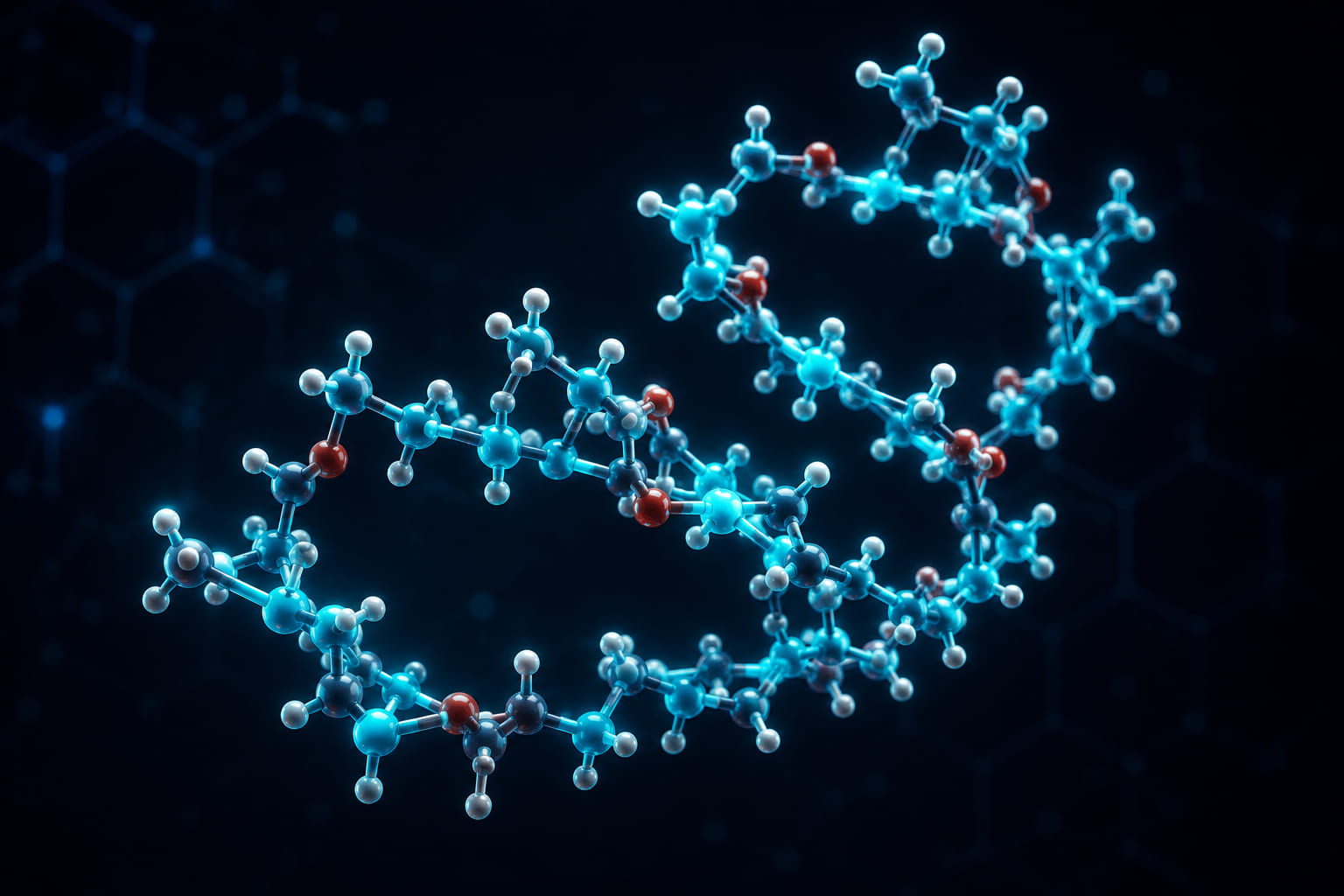
How Dihexa Works: HGF and c-Met
The mechanism that makes Dihexa distinctive is its action on the hepatocyte growth factor (HGF) and its receptor c-Met. Rather than binding a classical neurotransmitter receptor, research reports that Dihexa potentiates HGF/c-Met signaling — a pathway tied to cell growth, survival, and, in the nervous system, the building of new synaptic connections.
This is the link between the molecular mechanism and the behavioural research: if the HGF/c-Met axis drives synapse formation, a stable small-molecule potentiator is a valuable tool for studying that process. It remains preclinical, mechanism-level work.
Synaptogenesis: The Central Research Theme
The recurring theme across the Dihexa literature is synaptogenesis. In cell-culture and animal models, researchers examine Dihexa's effect on the formation of dendritic spines and functional synapses — reported in some assays at extremely low (picomolar-to-femtomolar) concentrations, which is part of why the compound attracted attention. Cognitive endpoints such as learning and memory, and models of neurodegeneration, follow from that synaptic focus.
It bears repeating: these are research findings in laboratory model systems. Dihexa is not a treatment for any human condition and is not supplied for human use.

Dihexa Among Nootropic Research Peptides
Dihexa sits in the same research shelf as other cognitive peptides, but its mechanism is distinct. The table below places it alongside two commonly studied nootropic peptides.
| Peptide | Class | Primary research mechanism |
|---|---|---|
| Dihexa | Angiotensin IV analog | HGF / c-Met · synaptogenesis |
| Semax | ACTH(4–10) analog | BDNF / neurotrophic signaling |
| Selank | Tuftsin analog | GABA / anxiolytic-model signaling |
For the neurotrophic and anxiolytic peptides, see our Selank & Semax nootropic research overview. All three are supplied strictly as research materials.
Reconstitution & Research Handling
Dihexa ships as a lyophilized powder and is reconstituted with bacteriostatic water before use. Wipe the stopper, add the diluent slowly down the vial wall, and swirl gently — never shake — then refrigerate at 2–8°C. The diluent volume sets the concentration; because Dihexa is studied at low concentrations, a dilute stock makes a workable volume easier to measure. For stability specifics, see the peptide storage and handling guide. These are reconstitution mechanics for laboratory handling only — not dosing recommendations, and not for human use.
Sourcing Dihexa in Canada
Helix North supplies Dihexa domestically within Canada as a research reagent, in a lyophilized 4 mg research kit with batch-specific HPLC purity verification. See the Dihexa Canada page for background on sourcing and testing, and the Dihexa 4 mg product listing to order. It ships anywhere in Canada by Canada Post Xpresspost — no customs, flat $30 CAD.
For Research Use Only
All discussion above describes in-vitro and animal-model laboratory research. Helix North supplies Dihexa for research applications only — not for human or animal consumption.