TL;DR: GHK-Cu is the tripeptide glycyl-histidyl-lysine bound to a copper ion. The GHK sequence occurs naturally in human plasma and carries copper, which is why the reconstituted solution is faintly blue. In the research literature it is studied for its role in collagen and extracellular-matrix (ECM) remodeling, wound-repair models, and — increasingly — hair-follicle biology. Everything below describes laboratory research; GHK-Cu is supplied for research use only, not for human consumption.
What Is GHK-Cu?
GHK-Cu is a copper complex of the tripeptide glycyl-L-histidyl-L-lysine (abbreviated GHK). The three-amino-acid sequence — glycine, histidine, lysine — has a naturally high affinity for copper(II), and the histidine residue is the key coordination site that holds the copper ion. When the peptide carries copper, it is written GHK-Cu and is often called copper tripeptide-1 or simply a "copper peptide."
GHK was first identified in human plasma, where its concentration is known to decline with age. Because the peptide is small and copper-binding, it has become a standard tool for research into how copper delivery and matrix signaling interact at the cellular level.
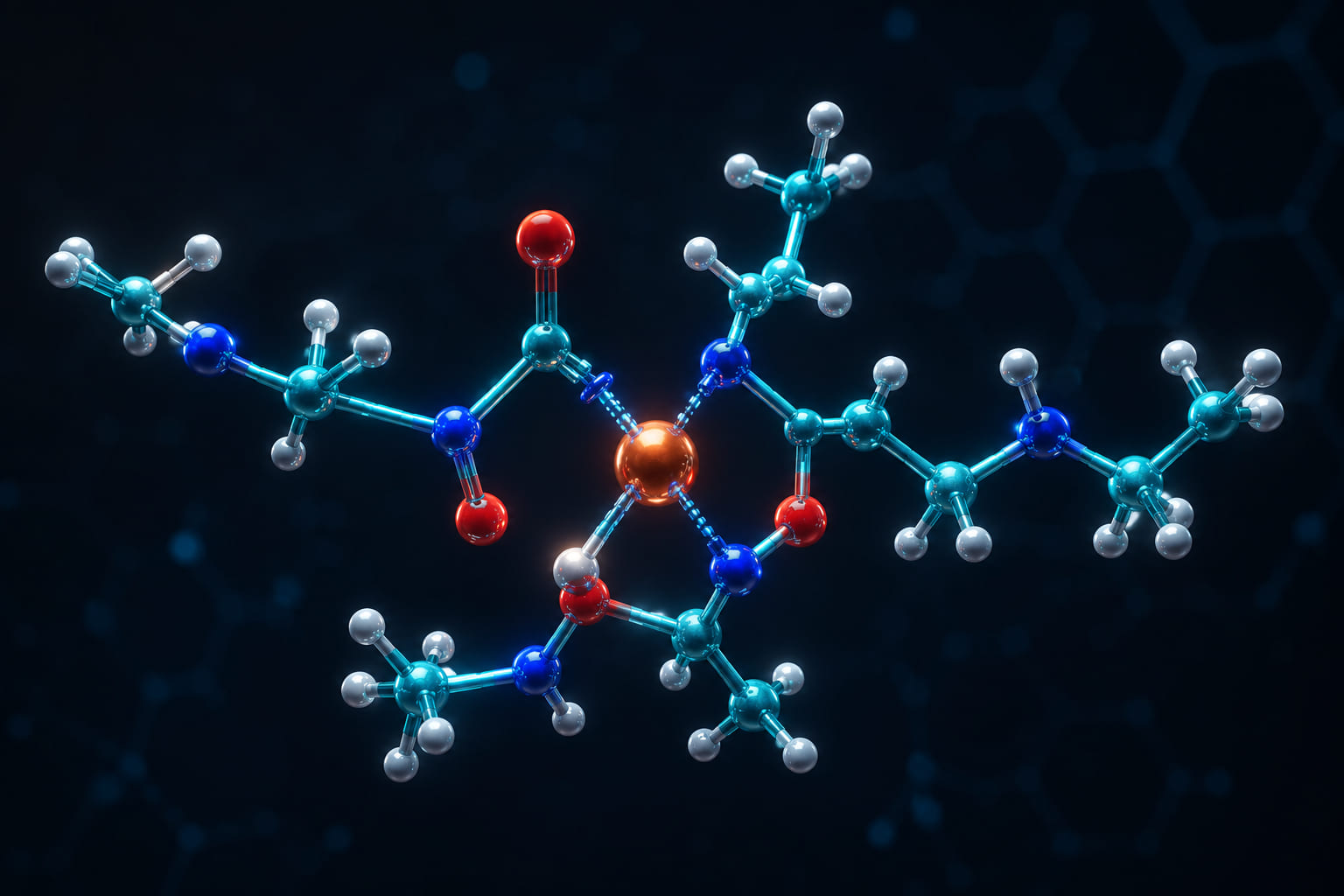
How GHK-Cu Binds Copper
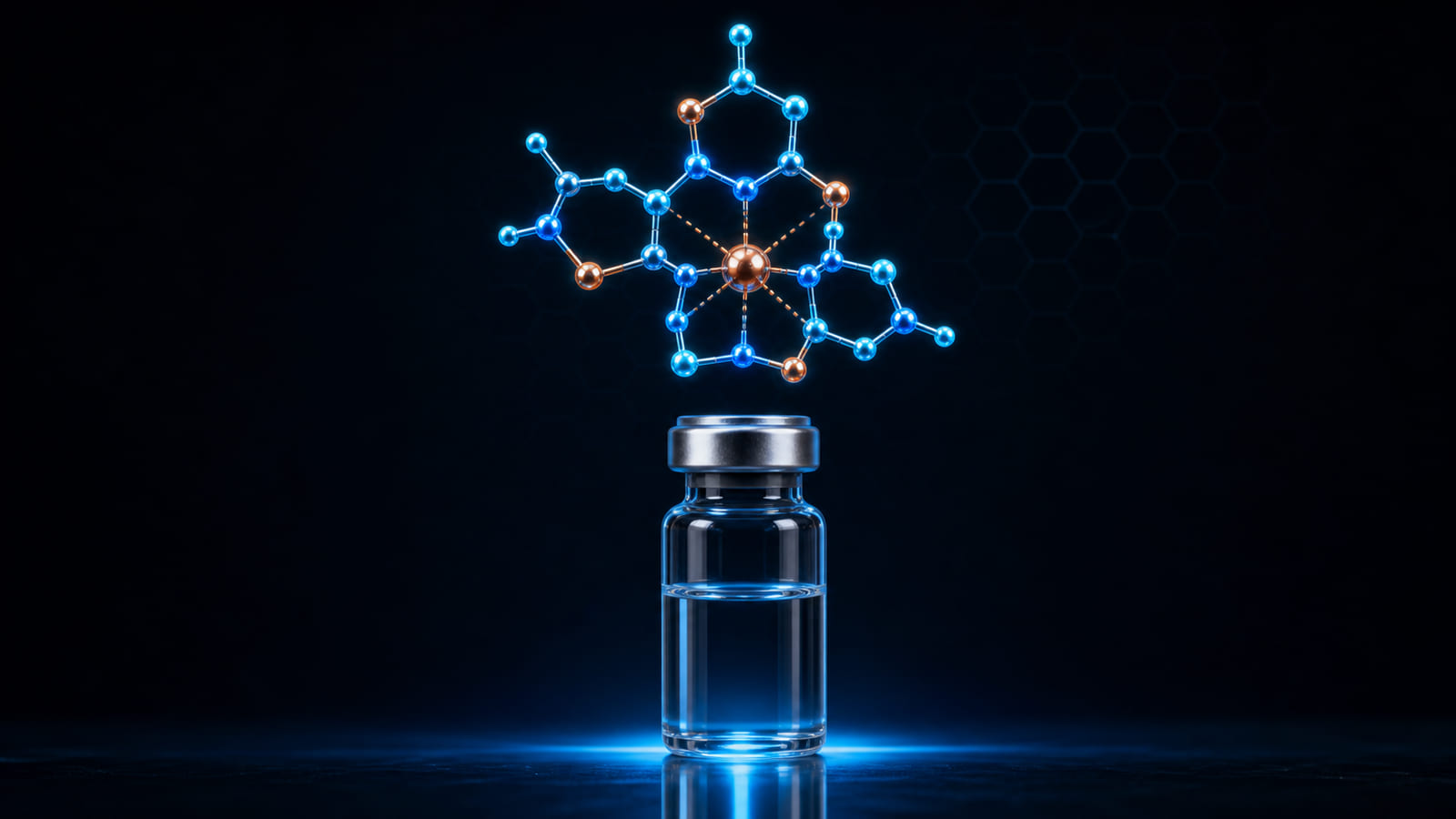
The defining feature of GHK-Cu is the coordination bond between the peptide and the copper ion. The histidine imidazole ring, together with the terminal amine and backbone nitrogen, forms the binding pocket that stabilizes copper(II). This is what makes GHK a copper carrier rather than an inert peptide — in research models the complex is studied as a way to present copper to cells in a controlled, peptide-bound form. The bound copper is also the origin of the solution's characteristic blue color once reconstituted.
What the Research Looks At
Most GHK-Cu literature concerns the extracellular matrix — the collagen, elastin, and proteoglycan scaffold that gives tissue its structure. In cell-culture and animal models, researchers examine GHK-Cu in the context of:
- Collagen and ECM remodeling — expression of matrix proteins and the enzymes that remodel them.
- Wound-repair models — the sequence of matrix breakdown and rebuilding that characterizes tissue repair.
- Antioxidant and signaling pathways — how copper-bound peptide signaling is studied at the gene-expression level.
These endpoints are measured in vitro (cell cultures) and in animal models. They describe mechanisms under investigation, not established outcomes in humans.
GHK-Cu and Hair-Follicle Research
A growing branch of the literature examines GHK-Cu in hair-follicle and dermal-papilla cell models. Dermal papilla cells sit at the base of the follicle and help regulate the hair growth cycle, and they are a common in-vitro system for studying follicle biology. In these models, researchers look at endpoints such as follicle size, growth-phase (anagen) signaling, and angiogenesis — the formation of the small blood vessels that supply an active follicle. GHK-Cu's ECM- and copper-related signaling is the mechanistic link researchers investigate here.
It is important to frame this precisely: these are research findings in laboratory model systems. GHK-Cu is not a hair-loss treatment and is not supplied for human use. For the peptide whose research centers most directly on the follicle and its vasculature, see our AHK-Cu research overview — GHK-Cu and AHK-Cu are frequently studied side by side.
GHK-Cu vs. Plain GHK
The peptide can exist with or without its copper. The difference matters for research design, because the copper is central to most of the mechanisms under study.
| Property | GHK (uncomplexed) | GHK-Cu (copper-bound) |
|---|---|---|
| Copper | None | One bound copper(II) ion |
| Solution color | Colorless | Faint blue |
| Typical research context | Peptide signaling without copper delivery | Copper-dependent ECM and repair models |
Reconstitution & Research Handling
GHK-Cu ships as a lyophilized (freeze-dried) powder. Reconstitution follows the same gentle protocol used across research peptides: add bacteriostatic water slowly down the vial wall, then swirl — never shake — until the solution is clear and uniformly blue. The blue tint is the copper and is expected. Store the reconstituted vial refrigerated at 2–8°C and protect it from prolonged light. For the step-by-step method, see our reconstitution guide, which uses the same technique.
Sourcing GHK-Cu in Canada
Helix North supplies GHK-Cu domestically within Canada as a research reagent. See the GHK-Cu Canada page for background, and the product listings for available sizes: GHK-Cu 50 mg, GHK-Cu 100 mg, and GHK-Cu 200 mg. Researchers combining copper peptides may also look at the AHK-Cu / GHK-Cu combination. Each ships freeze-dried with batch-specific HPLC purity verification.
For Research Use Only
All discussion above describes in-vitro and animal-model laboratory research. Helix North supplies GHK-Cu for research applications only — not for human or animal consumption.