TL;DR: AHK-Cu is the tripeptide alanyl-histidyl-lysine bound to a copper ion — a close relative of GHK-Cu that differs by a single amino acid. In the research literature it is studied mainly in hair-follicle and angiogenesis models, which is where it is most often compared with, and paired alongside, GHK-Cu. Everything here describes laboratory research; AHK-Cu is supplied for research use only.
What Is AHK-Cu?
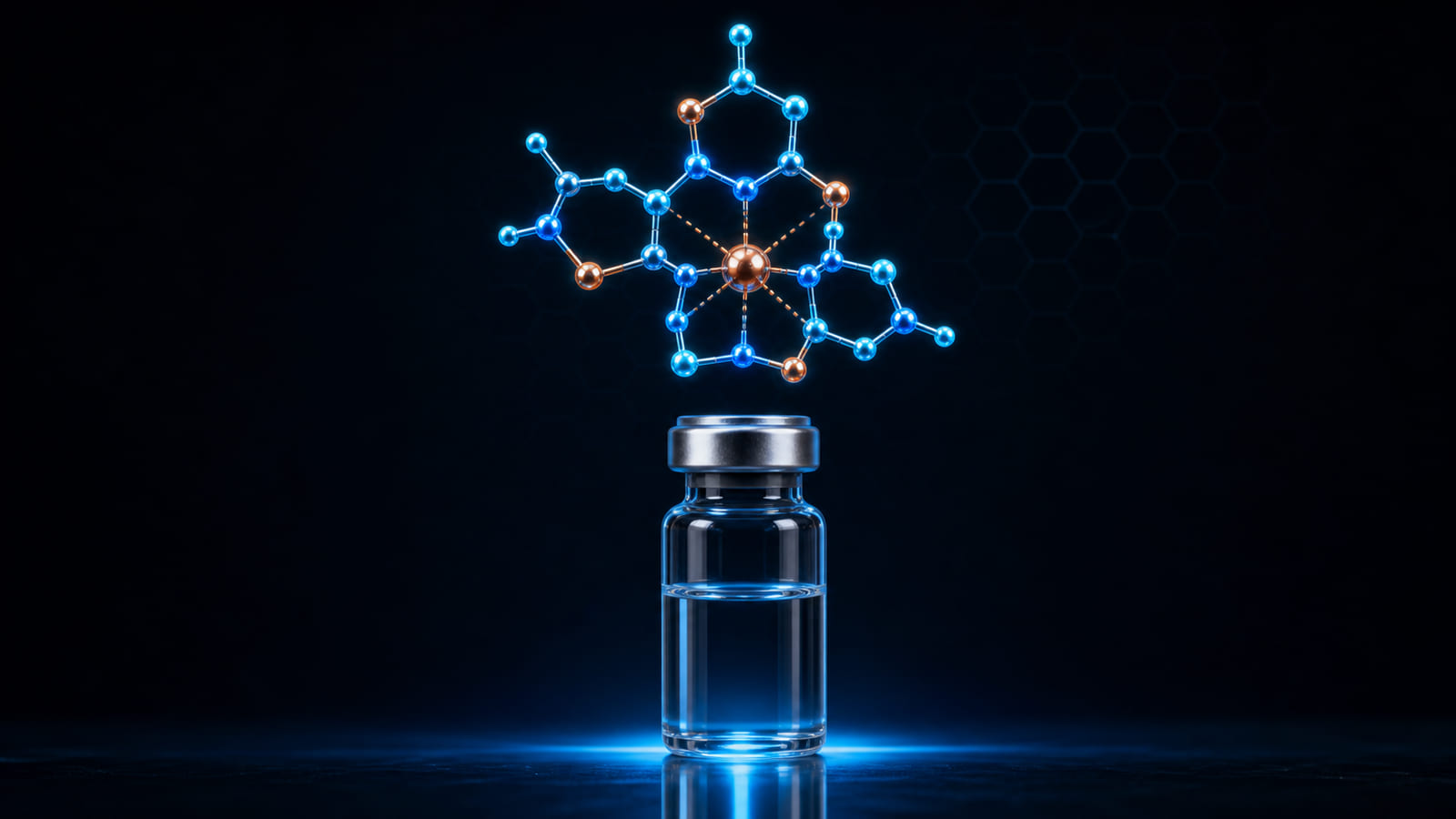
AHK-Cu is a copper complex of the tripeptide alanyl-L-histidyl-L-lysine (AHK). Structurally it belongs to the same family as GHK-Cu: a three-residue peptide with a histidine that coordinates a copper(II) ion. It is sometimes described as a second-generation copper peptide, studied for research contexts where the hair follicle is the focus.
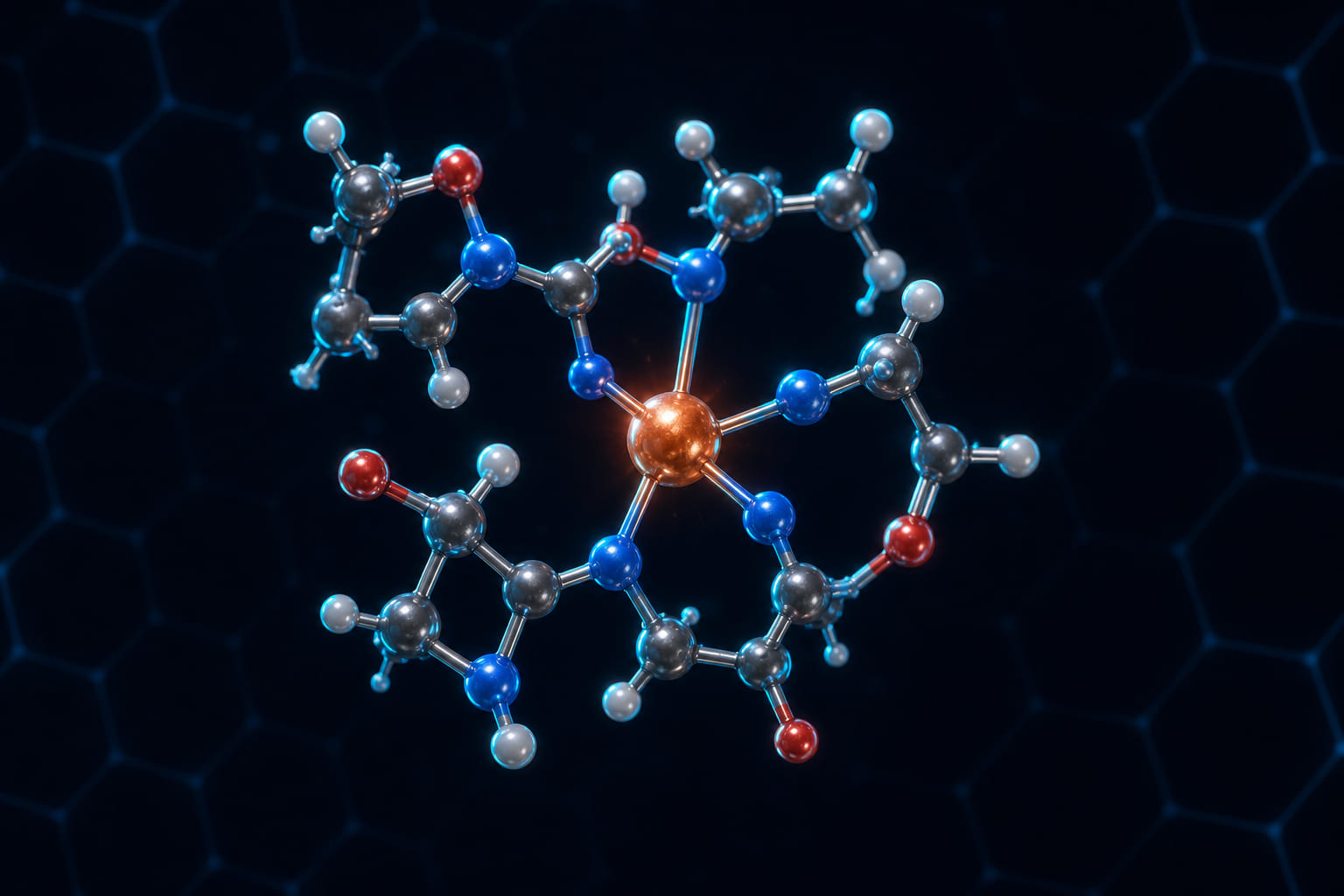
AHK-Cu vs. GHK-Cu
The two peptides are easy to confuse because they share the His-Lys core and both carry copper. The meaningful difference is the first residue — alanine in AHK, glycine in GHK — and, in practice, the research emphasis each has accumulated.
| Property | AHK-Cu | GHK-Cu |
|---|---|---|
| Sequence | Ala-His-Lys + Cu²⁺ | Gly-His-Lys + Cu²⁺ |
| Primary research focus | Hair follicle & angiogenesis | Collagen / ECM remodeling & repair |
| Typical pairing | Studied with GHK-Cu | Studied with AHK-Cu |
For the broader ECM and collagen literature, see our GHK-Cu research guide.
What the Research Looks At
AHK-Cu research concentrates on the hair follicle and its vascular supply. In cell-culture and animal models, studies examine endpoints such as:
- Follicle-associated signaling — activity in and around dermal-papilla and follicle cells.
- Angiogenesis — the formation of the microvessels that feed an active follicle.
- Copper-dependent matrix effects — the same copper-carrier logic that underlies copper-peptide research generally.
These are laboratory endpoints. AHK-Cu is not a hair-loss treatment and is not supplied for human use.
Using AHK-Cu Alongside GHK-Cu
Because the two copper peptides bring complementary research angles, they are often examined together. Researchers looking at both can use the AHK-Cu / GHK-Cu combination, which supplies both in a single research format.
Reconstitution & Research Handling
AHK-Cu ships lyophilized. Reconstitute with bacteriostatic water added slowly down the vial wall, swirl gently until clear, and expect the faint blue copper tint. Store refrigerated at 2–8°C. The technique matches the general reconstitution guide.
Sourcing AHK-Cu in Canada
Helix North supplies AHK-Cu domestically within Canada as a research reagent. See the AHK-Cu Canada page for background and AHK-Cu 50 mg for the product listing, each with batch-specific HPLC purity verification.
For Research Use Only
All discussion above describes in-vitro and animal-model laboratory research. Helix North supplies AHK-Cu for research applications only — not for human or animal consumption.