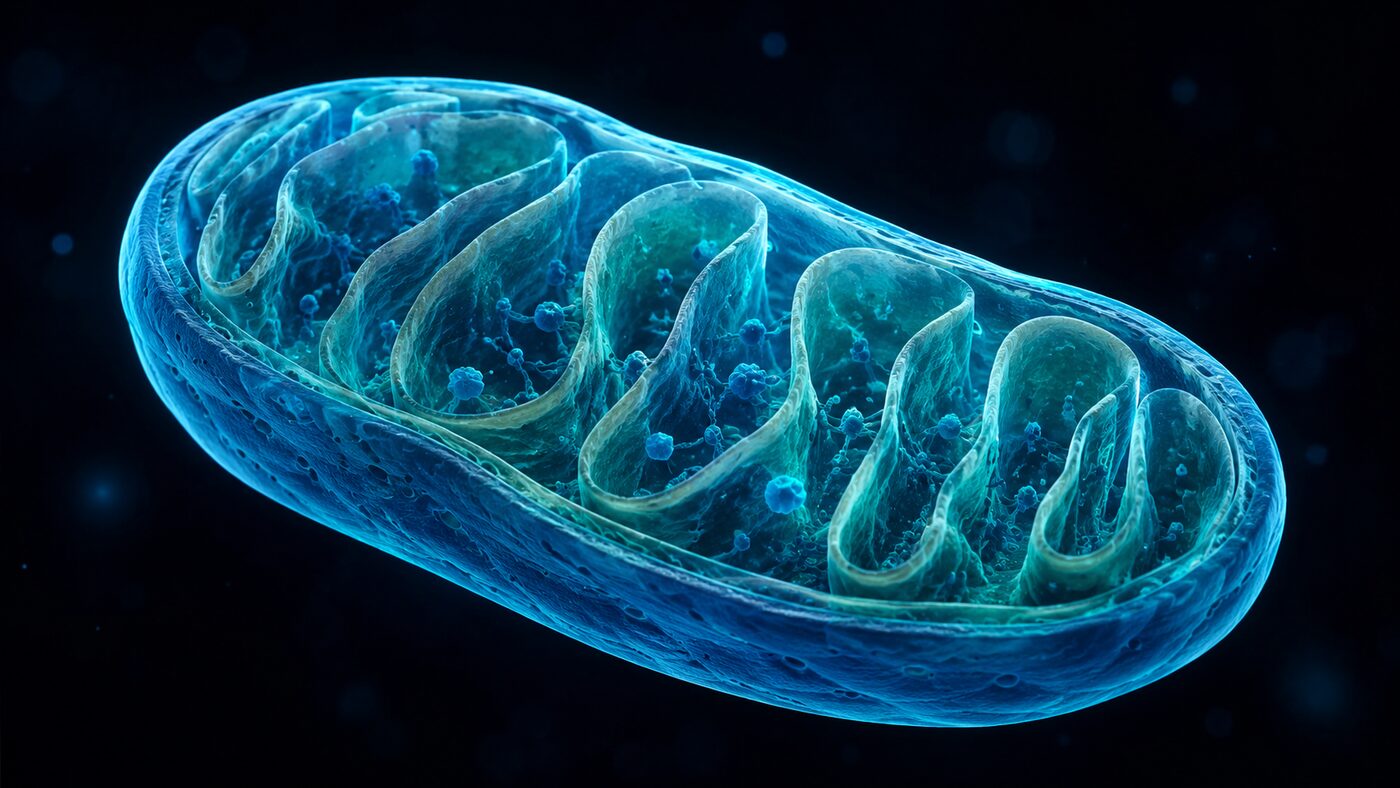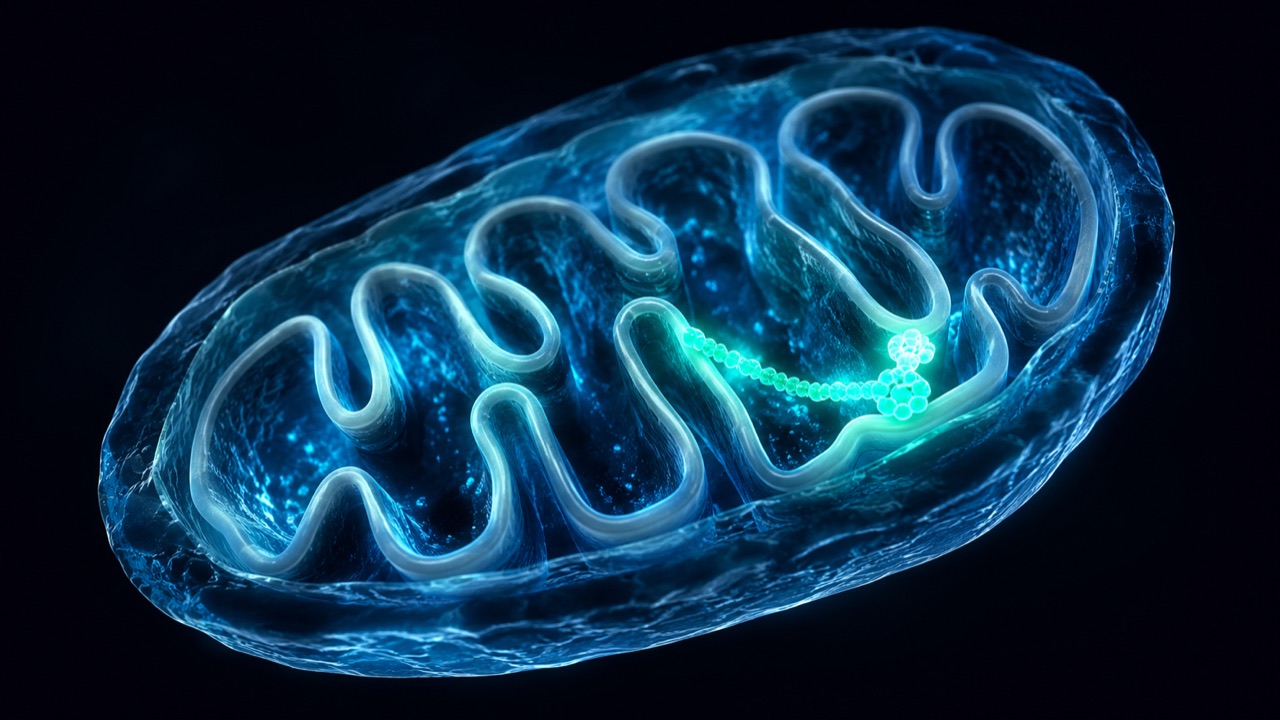
TL;DR: SS-31 (elamipretide) is a mitochondria-targeting tetrapeptide that concentrates in the inner mitochondrial membrane and binds cardiolipin, the lipid that organizes the energy-producing machinery of the cell. It is studied for keeping mitochondria efficient under stress. Everything below is research context; Helix North does not currently supply it.
What Is SS-31?
SS-31 — also called elamipretide or MTP-131 — belongs to the Szeto-Schiller family of peptides, named for the researchers who developed them. It is a small, cell-permeable tetrapeptide with an unusual property: rather than acting on a surface receptor, it concentrates inside mitochondria, the organelles that produce most of the cell's energy.
That targeting is what makes it a distinctive research tool. Helix North discusses SS-31 as a research compound; it is not currently in the catalog.
How SS-31 Works: Cardiolipin
Inside the mitochondrion, SS-31 binds cardiolipin — a phospholipid found almost exclusively on the inner mitochondrial membrane, where it helps organize the protein complexes of the electron-transport chain that generate ATP. When cardiolipin is damaged by oxidative stress or age, that machinery becomes leaky and inefficient.
In research models, SS-31's association with cardiolipin is reported to stabilize cristae structure, improve electron-transport efficiency and reduce reactive-oxygen-species leakage — helping mitochondria make energy more cleanly. It is mechanism-level, preclinical work.
SS-31's research interest rests on a single, precise idea: protect the lipid that organizes the cell's energy machinery, and you protect energy production itself.
Where SS-31 Is Studied
Because mitochondrial dysfunction cuts across many tissues, SS-31 appears in a wide research literature — cardiac, renal, neurological and skeletal-muscle models, plus ischemia-reperfusion injury and aging. The common thread is energy metabolism under stress. None of it establishes a human therapeutic effect.
SS-31 Among Mitochondrial Research Peptides
SS-31 targets the mitochondrial membrane directly, but it is one of several angles researchers take on mitochondrial function.
| Compound | Mitochondrial angle |
|---|---|
| SS-31 | Binds cardiolipin · membrane stabilization |
| MOTS-c | Mitochondrial-derived peptide · metabolic signaling |
| NAD+ | Redox cofactor · electron-transport fuel |
For the mitochondrial-derived signaling peptide, see our MOTS-c research overview; for the redox cofactor, the NAD+ research overview.
Research Handling & Reconstitution
SS-31 ships as a lyophilized powder reconstituted with bacteriostatic water; a reconstitution calculator sets the concentration. Refrigerate after mixing and minimize freeze-thaw cycles — see the peptide storage and handling guide. Laboratory-handling mechanics only, not dosing recommendations.
Research Status & Availability
SS-31 is not currently part of the Helix North catalog. Researchers studying mitochondrial function can explore the catalog's mitochondrial peptides such as MOTS-c and NAD+ (see the MOTS-c and NAD+ overviews), or browse the full Canadian research peptides range.
For Research Use Only
All discussion above describes in-vitro and animal-model laboratory research. Any peptide Helix North supplies is provided strictly for research use — not for human or animal consumption.