TL;DR: BPC-157 ships as a freeze-dried powder. Before it can be used in lab work, it has to be dissolved in sterile liquid — usually bacteriostatic water. Small handling mistakes (wrong volume, contamination, harsh mixing) can ruin the stock, so the reconstitution step deserves care.
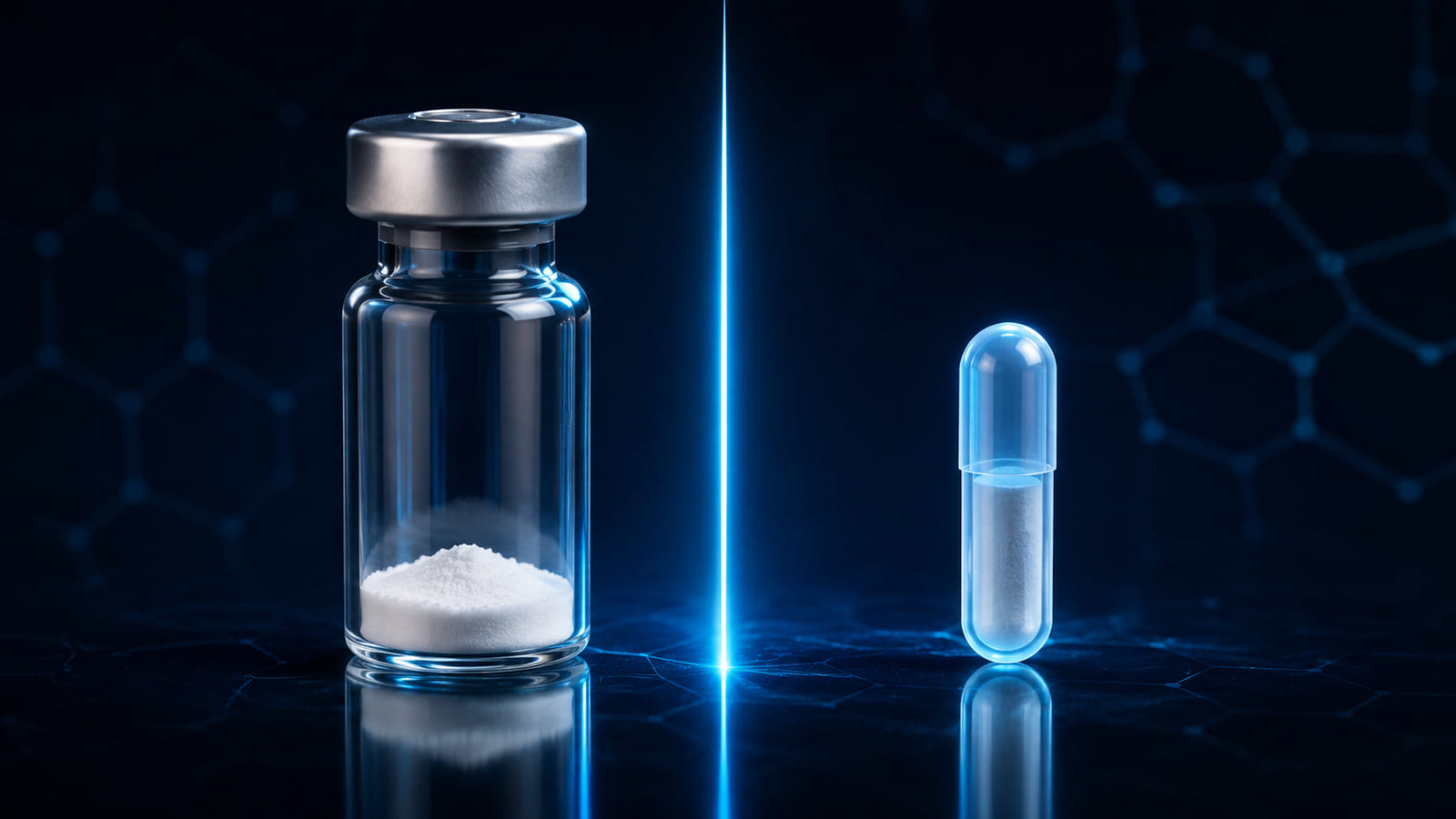
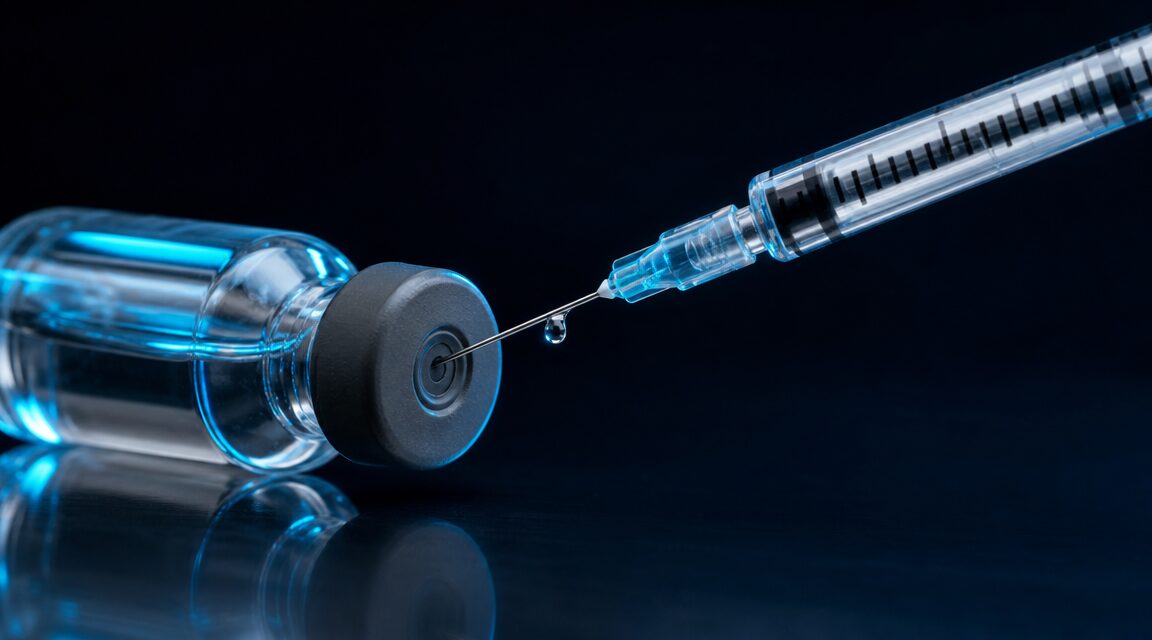
Freeze-dried peptides like BPC-157 arrive as a fine powder in a sealed vial. Researchers add a small amount of sterile liquid to dissolve them before measuring, splitting into smaller portions, or applying in lab models. The step looks simple, but errors compound across an experiment.
Picking the Right Liquid
Two diluents are common in peptide research:
- Sterile water for injection (SWFI): ultrapure water, no additives.
- Bacteriostatic water (BAC water): the same water plus 0.9% benzyl alcohol, a preservative that holds back bacterial growth.
If a vial will only be sampled once, SWFI is fine. If it will be drawn from across multiple sessions over days or weeks, BAC water is the standard choice — the preservative protects the stock between draws. A few peptide chemistries don't play well with benzyl alcohol, so check the published literature for the specific compound before defaulting either way. For a deeper look at the diluent itself, see our bacteriostatic water guide.
The Concentration Math
Concentration is just mass divided by volume, so the diluent volume you add to a 5 mg or 10 mg BPC-157 vial sets the strength of the finished stock. A 5 mg vial mixed with 2 mL of bacteriostatic water gives 2.5 mg/mL; a 10 mg vial with 2 mL gives 5 mg/mL.
- 5 mg ÷ 2 mL = 2.5 mg/mL
- 5 mg ÷ 5 mL = 1 mg/mL
- 10 mg ÷ 2 mL = 5 mg/mL
- 10 mg ÷ 5 mL = 2 mg/mL
Researchers typically pick a diluent volume that makes downstream draws line up cleanly with standard insulin syringe units (where each unit equals 0.01 mL). Changing the diluent volume changes the concentration — it never changes the total mass of peptide in the vial. Our peptide reconstitution calculator converts any BPC-157 vial and diluent volume into the exact units to draw, and the BPC-157 dosage chart tabulates the common combinations if you would rather read them off a table.
Technique
Freeze-dried peptide is delicate. Blasting diluent directly onto the powder cake can shear the molecule and reduce activity. The accepted technique:
- Aim the diluent stream against the inner glass wall of the vial so it runs down gently.
- Swirl — never shake — until the powder fully dissolves.
If the solution is still cloudy or shows visible specks after several minutes of swirling, don't heat or vortex it. Discard and reconstitute a fresh vial. Cloudiness means either incomplete dissolution or compromised peptide.
Storing BPC-157
Before reconstitution: lyophilized (freeze-dried) BPC-157 is the stable form. Keep sealed vials in the freezer (around −20°C), away from light and moisture, until you're ready to use them. In this state the peptide holds for many months.
After reconstitution: once it's in liquid form, BPC-157 belongs in the fridge at 2–8°C — not the freezer. Repeated freeze-thaw cycles speed up aggregation and degradation. A reconstituted vial is generally considered viable for 30–60 days under refrigeration, though stability varies by lot and storage conditions.
Keep it out of direct light, label the vial with the date of reconstitution, and inspect visually before each draw. Discoloration or floating particles mean it's done. Storing BPC-157 correctly — cold, dark, and dated — is the single biggest factor in how long a reconstituted stock stays usable.
For Research Use Only
Everything above describes laboratory and in-vitro work. Helix North supplies BPC-157 strictly for research applications, and stocks bacteriostatic water as a companion product for handling. See the BPC-157 Canada guide for forms, purity, and domestic sourcing.