TL;DR: A retatrutide "dosage chart in units" is just a conversion table: given the concentration of your reconstituted stock, it maps a target amount of peptide to marks on a standard U-100 insulin syringe (where 1 unit = 0.01 mL). Below are reference tables for 10 mg and 20 mg vials at the most common dilution volumes. For any combination not listed, the peptide reconstitution calculator does the math instantly. These are concentration references for laboratory handling of a research material — not human dosing guidance.
How to Read a Units Chart
The word "dosage" in these searches is really shorthand for a units conversion, and the conversion has only one input beyond the target amount: concentration. Reconstituted stock concentration equals the vial mass divided by the diluent volume added. Once you know it, everything else follows from a single fact about the syringe.
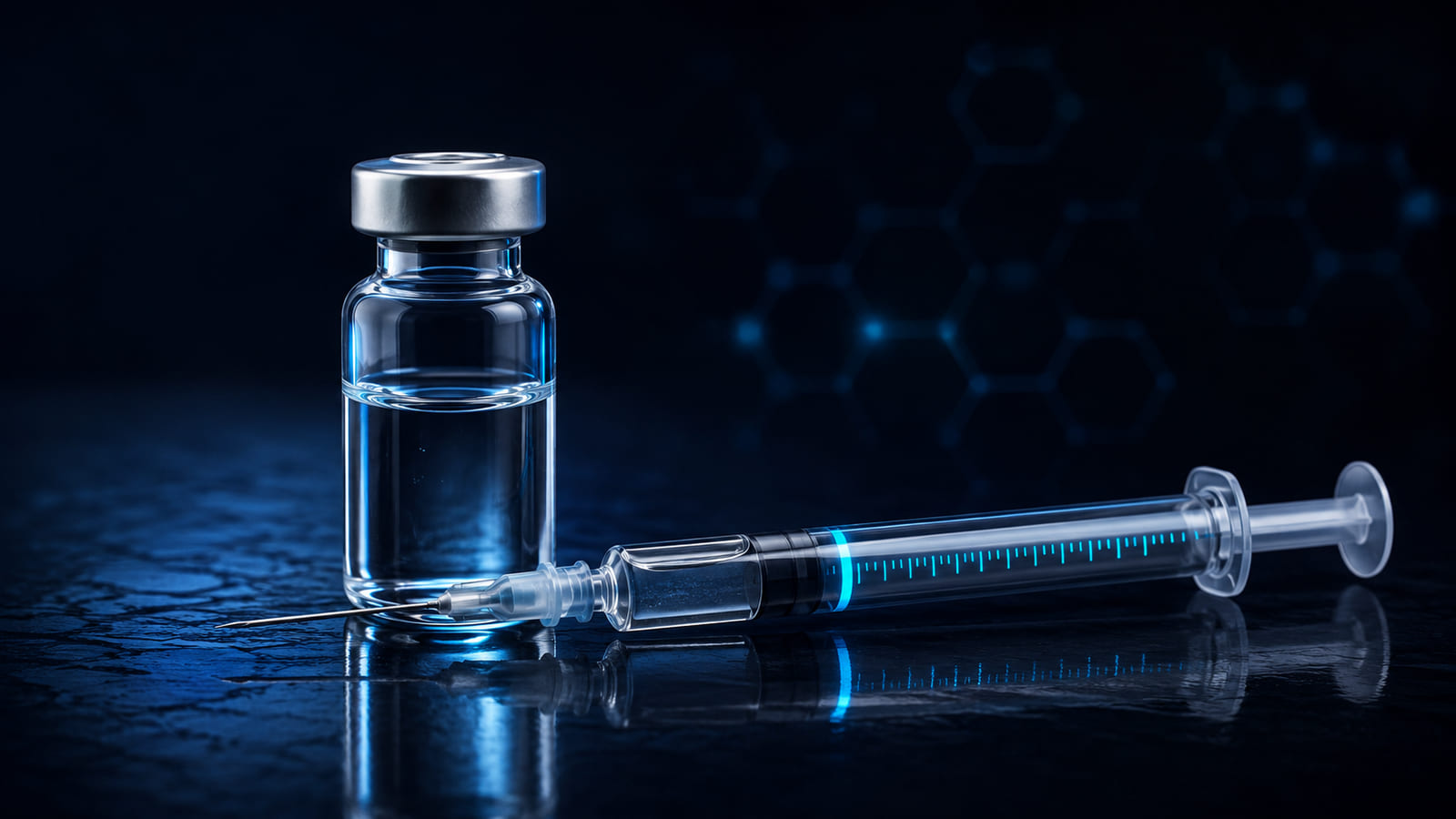
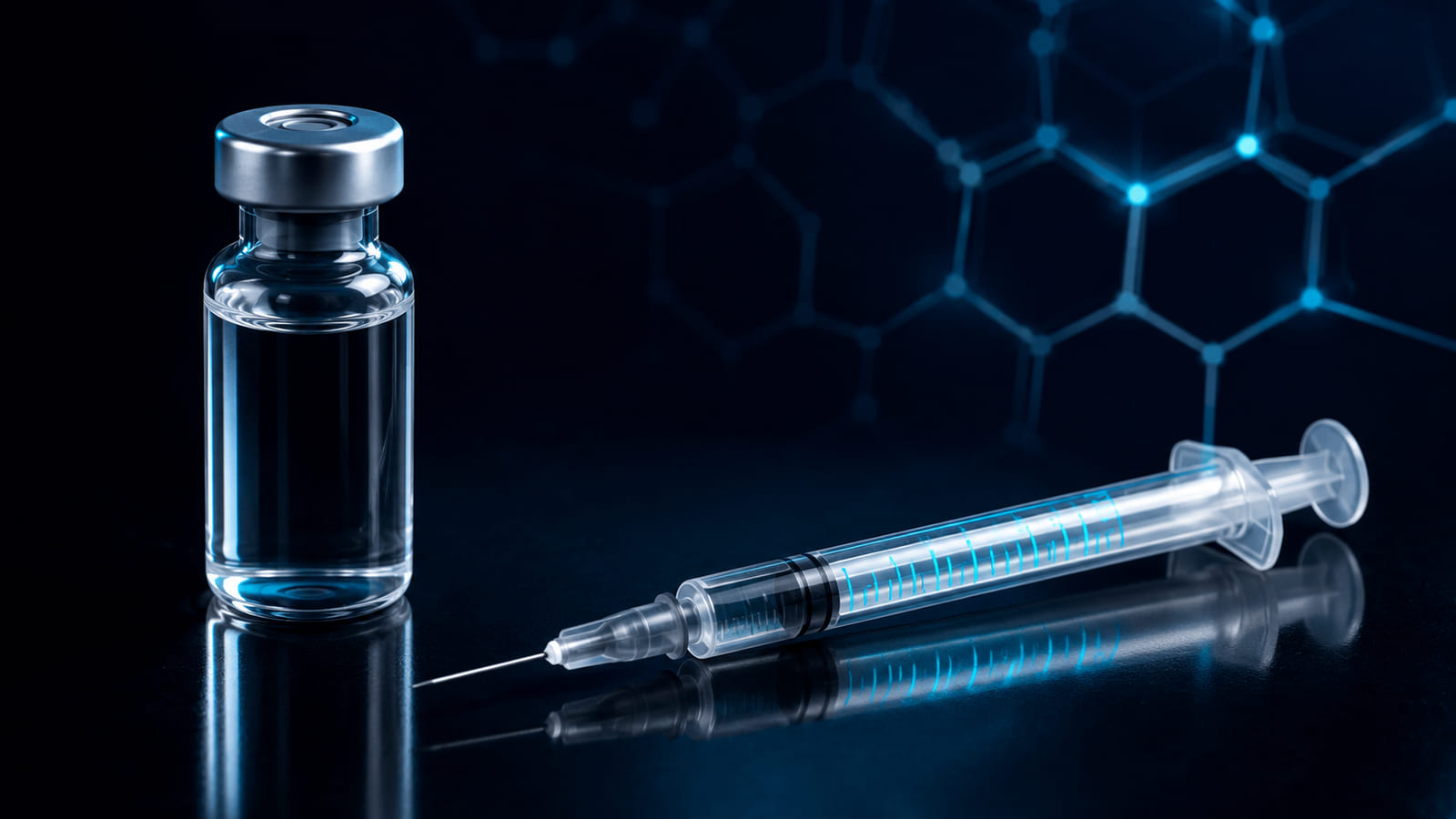
On a standard U-100 insulin syringe, the barrel is marked 0–100 units, and one unit equals 0.01 mL. So the amount of peptide in one unit is the concentration (mg/mL) multiplied by 0.01. From there, the units for any target amount are just the target divided by the amount-per-unit. No chart is anything more than that arithmetic applied across a few common values.
A units figure is meaningless without a concentration. "20 units of retatrutide" only specifies an amount once you also know the vial was reconstituted to, say, 5 mg/mL.
10 mg Vial Reference Charts
The Retatrutide 10 mg vial is most often reconstituted to either 5 mg/mL (2 mL of diluent) or 2.5 mg/mL (4 mL of diluent). Both are tabulated below.
10 mg vial · 2 mL diluent · 5 mg/mL (each unit = 0.05 mg / 50 mcg):
| Target amount | Draw volume | U-100 units |
|---|---|---|
| 0.25 mg | 0.05 mL | 5 units |
| 0.5 mg | 0.10 mL | 10 units |
| 1 mg | 0.20 mL | 20 units |
| 1.5 mg | 0.30 mL | 30 units |
| 2 mg | 0.40 mL | 40 units |
| 3 mg | 0.60 mL | 60 units |
10 mg vial · 4 mL diluent · 2.5 mg/mL (each unit = 0.025 mg / 25 mcg):
| Target amount | Draw volume | U-100 units |
|---|---|---|
| 0.25 mg | 0.10 mL | 10 units |
| 0.5 mg | 0.20 mL | 20 units |
| 1 mg | 0.40 mL | 40 units |
| 1.5 mg | 0.60 mL | 60 units |
| 2 mg | 0.80 mL | 80 units |
Notice the trade-off between the two: halving the concentration doubles the units for the same amount. A more dilute stock gives larger, easier-to-measure draws but consumes more volume per amount.
20 mg Vial Reference Charts
The Retatrutide 20 mg vial is commonly reconstituted to 10 mg/mL (2 mL) or 5 mg/mL (4 mL).
20 mg vial · 2 mL diluent · 10 mg/mL (each unit = 0.1 mg / 100 mcg):
| Target amount | Draw volume | U-100 units |
|---|---|---|
| 0.5 mg | 0.05 mL | 5 units |
| 1 mg | 0.10 mL | 10 units |
| 2 mg | 0.20 mL | 20 units |
| 4 mg | 0.40 mL | 40 units |
| 6 mg | 0.60 mL | 60 units |
20 mg vial · 4 mL diluent · 5 mg/mL (each unit = 0.05 mg / 50 mcg):
| Target amount | Draw volume | U-100 units |
|---|---|---|
| 0.5 mg | 0.10 mL | 10 units |
| 1 mg | 0.20 mL | 20 units |
| 2 mg | 0.40 mL | 40 units |
| 4 mg | 0.80 mL | 80 units |
Where the Concentration Comes From
Every number above depends on reconstituting the vial correctly and knowing the resulting concentration. The full method — diluent choice, technique, and the concentration math — is in our guide to reconstituting retatrutide. Bacteriostatic water is the standard diluent for multi-draw vials; see the bacteriostatic water guide and the companion 30 mL BAC water product.
A Chart Is Not a Titration Schedule
It is worth separating two things that "dosage" searches often blur together. A units chart is a static lookup — given a concentration, it tells you the marks for a target amount. A titration schedule is escalation logic — how a research amount is stepped up over weeks. The chart tells you how to draw a given amount; the titration protocol tells you how that amount changes over a study. Our retatrutide titration protocol covers the second question, and the two are meant to be used together.
Use the Calculator for Any Combination
The tables above cover the most common setups, but any vial size, diluent volume, and target amount can be converted directly with the peptide reconstitution calculator. It takes the guesswork out of off-chart concentrations and shows the exact units to draw on a chosen syringe size. Helix North also stocks a 30 mg vial, listed alongside the others on our buy retatrutide in Canada page, for concentrations beyond the charts here.
A Note on "Dosing" Language
The tables here use "target amount" deliberately rather than "dose." Retatrutide is supplied as a research material, and these charts are concentration references for laboratory handling — conversions between peptide mass and syringe units. They are not human dosing recommendations, and no route, schedule, or human use is implied by them.
For Research Use Only
All figures above are reconstitution and concentration references for in-vitro and laboratory research. Helix North supplies retatrutide and bacteriostatic water for research applications only — not for human or animal consumption, and not as dosing guidance.